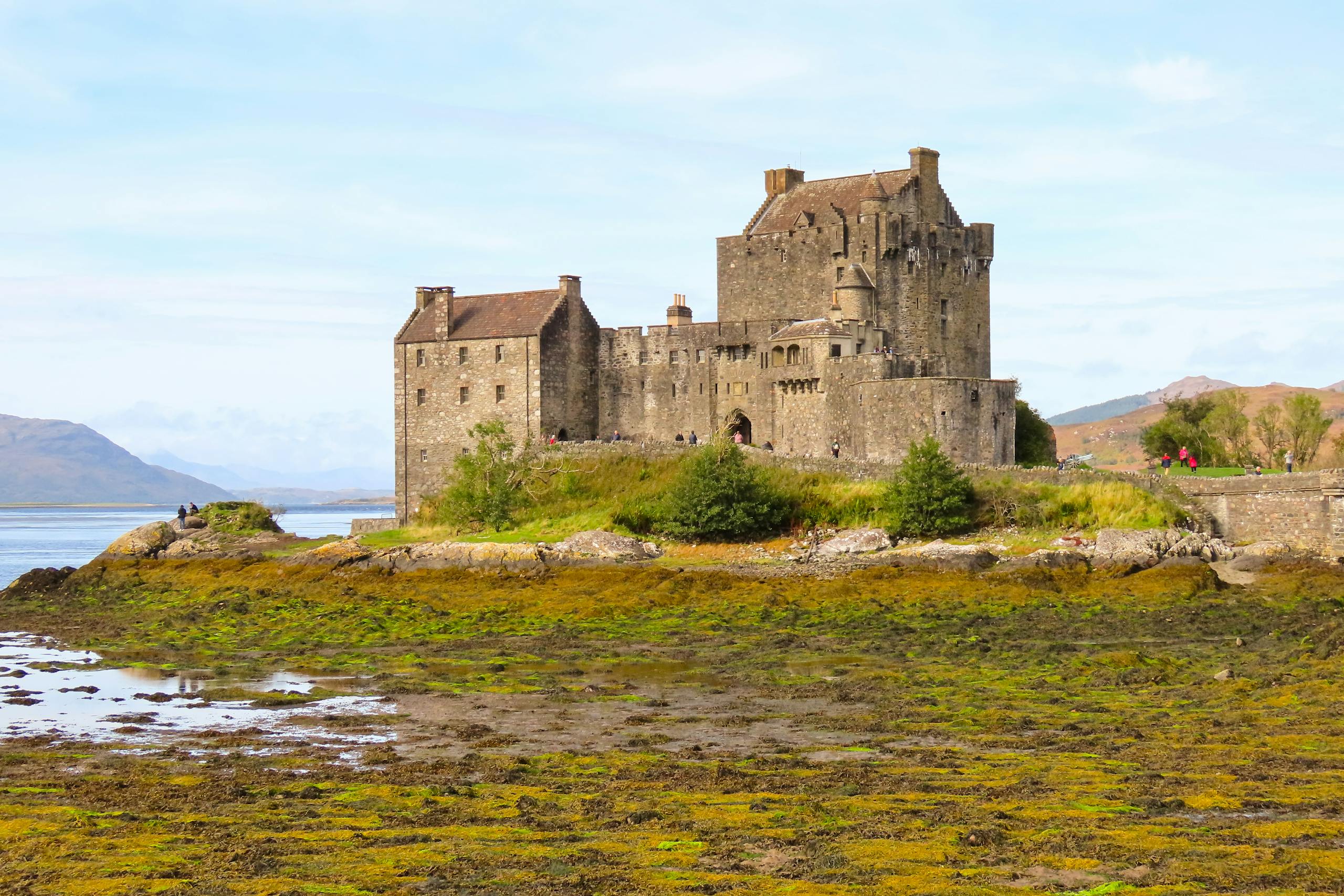
Scotland is the northernmost country of the United Kingdom. Bordered by England to the south and surrounded by the North Sea and Atlantic Ocean. Known for its dramatic landscapes, historic cities, and island culture. Scotland is one of Europe’s most rewarding destinations to explore by ferry.
From the cultural streets of Edinburgh to the rugged beauty of the Orkney and Shetland Islands. Scotland offers a mix of city breaks, road trips, and remote escapes. Travelling by ferry allows you to arrive with your vehicle. Making it easier to explore multiple regions in one trip, from the mainland to the islands.
How do I get there?
You can reach Scotland by ferry from both Ireland and Northern Ireland. With additional routes connecting the Scottish mainland to its northern islands.
The most popular routes include:
- Ferries from Larne to Scotland (via Northern Ireland connections)
- Ferries from Belfast to Scotland (Cairnryan)
- Aberdeen to Orkney & Shetland Islands
These routes allow both foot passengers and vehicles. Making them ideal for flexible travel across Scotland. 👉 Compare all UK ferry crossings below:
Ferries to Scotland
Why choose ferry?
Choosing ferries to Scotland allows you to bring your car and explore beyond the main cities. It can also offer several advantages over flying:
- Bring your car – Ideal for road trips through the Highlands and islands
- No baggage limits – Perfect for longer stays or outdoor gear
- Scenic travel – Coastal views and island arrivals add to the experience
- Flexible routes – Easy connections between mainland and islands
- Less hassle – No airport queues or strict check-in times
Ferries are especially valuable if you’re planning to explore beyond major cities like Glasgow or Edinburgh, where public transport becomes more limited.
What are my options?
Belfast to Cairnryan
The Belfast to Cairnryan ferry is the fastest and most direct route between Northern Ireland and mainland Scotland, with a crossing time of around 2 hours. This route is ideal for travellers looking for a quick and convenient way to start their journey, especially those planning a road trip through southwest Scotland, Glasgow, or onward to Edinburgh.
Cairnryan is well positioned for easy access to Scotland’s major cities, with Glasgow just over an hour away and Edinburgh reachable in under 3 hours by car. This makes it one of the best options for both short breaks and longer trips exploring the Highlands.
Ferries From Belfast to Cairnryan
 |
Larne to Scotland
The Larne to Cairnryan ferry is one of the most convenient and direct routes between Northern Ireland and mainland Scotland, with a crossing time of approximately 2 hours. This route is ideal for travellers looking for a fast, straightforward journey with excellent road connections on both sides.
Arriving into Cairnryan places you within easy reach of Glasgow (around 1 hour 30 minutes) and Edinburgh (around 2.5–3 hours), making it a strong choice for both city breaks and longer road trips through Scotland. It’s particularly popular with travellers bringing a vehicle, as it provides quick access to the Scottish Highlands, Loch Lomond, and the west coast.
Ferries From Larne to Cairnryan
 |
While there’s no direct Dublin–Scotland ferry, travellers often use Dublin to Liverpool and drive north. This is a flexible option for longer trips.
👉 See Dublin to Liverpool ferry routes
Aberdeen to Kirkwall (Orkney Islands)
The Aberdeen to Kirkwall ferry, operated by NorthLink Ferries, connects mainland Scotland to the Orkney Islands in approximately 6–7 hours. This route is ideal for travellers looking to explore Scotland’s northern islands, known for their rich history, coastal landscapes, and archaeological sites.
Aberdeen itself is a key travel hub and can be reached as part of a longer east coast itinerary, often after visiting Edinburgh or St Andrews. Kirkwall provides a great base for exploring Orkney, making this route perfect for island-focused trips or extended stays.
Ferries From Aberdeen to Kirkwall
 |
Aberdeen to Lerwick (Shetland Islands)
The Aberdeen to Lerwick ferry is an overnight crossing taking around 12–14 hours, offering cabins and onboard facilities for a comfortable journey. This route is best suited for travellers heading to the remote Shetland Islands, one of the most unique and untouched parts of the UK.
Lerwick serves as the main gateway to Shetland, where visitors can experience dramatic coastlines, wildlife, and Viking heritage. This route is ideal for those planning a longer, more immersive trip, often combined with Orkney or mainland Scotland as part of a wider itinerary.
Ferries From Aberdeen to Lerwick
|
Scrabster to Stromness
The Scrabster to Stromness ferry is one of the most scenic crossings in Scotland, taking around 90 minutes and linking the north coast of mainland Scotland with the Orkney Islands. It’s a popular choice for travellers driving the North Coast 500, offering a seamless extension into island exploration.
Scrabster is located near Thurso, making it accessible for those travelling through the Highlands. Stromness provides a charming arrival point in Orkney, ideal for shorter island visits or as part of a loop itinerary including Aberdeen routes.
Ferries From Scrabster to Stromness
|
Which is best?
- Fastest route: Ferry from Belfast to Cairnryan
- Best for island travel: Ferry from Aberdeen to Kirkwall or Aberdeen to Lerwick ferry route
- Best for road trips: Ferry from Belfast to Cairnryan (easy access to Highlands)
- Most scenic: Scrabster to Stromness ferry routes.
Your best option depends on whether you’re visiting mainland cities or exploring Scotland’s islands.
Who runs them?
The main ferry operators serving Scotland include:
- Stena Line – Belfast to Cairnryan ferry routes
- P&O Ferries – Alternative Northern Ireland routes
- NorthLink Ferries – Routes to Orkney and Shetland
Where do they go?
Key ferry ports in Scotland include:
- Cairnryan – Main gateway from Northern Ireland
- Aberdeen – Hub for island ferries
- Scrabster – Northern mainland access to Orkney
- Kirkwall & Stromness – Orkney ports
- Lerwick – Shetland Islands
These ports provide access to both major cities and remote regions.
What can I do there?
Edinburgh
Scotland’s capital is one of the most popular destinations for travellers arriving by ferry, combining historic landmarks with a compact, walkable city centre. Highlights include Edinburgh Castle, the Royal Mile, and Arthur’s Seat, offering panoramic views across the city.
For ferry travellers, Edinburgh is typically reached via the Cairnryan port, around a 2 hour 30 minute drive, making it an ideal first stop on a Scotland itinerary. Many visitors arriving on ferries from Belfast to Scotland choose Edinburgh as part of a city + Highlands road trip, combining culture with scenic driving routes further north.
👉 Explore ferries from Belfast to Scotland
Glasgow
Located just over an hour from Cairnryan, Glasgow is often the first major city reached by ferry travellers arriving from Northern Ireland. Known for its live music scene, Victorian architecture, and vibrant nightlife, it’s a great entry point into Scotland.
Glasgow works well as either a short city break or the starting point for a wider journey, with easy access to Loch Lomond, the Highlands, and the west coast islands. Travellers using Scotland ferry routes from Belfast often base themselves here before heading further north.
👉 Compare ferry routes to Scotland
Aberdeen
Aberdeen, often referred to as the “Granite City,” is a key hub for travellers heading to Scotland’s northern islands. It’s also the departure point for NorthLink Ferries routes to Orkney and Shetland, making it essential for island-hopping itineraries.
For those travelling by ferry to Scotland, Aberdeen is best reached as part of a longer road trip through the east coast, typically after visiting Edinburgh or St Andrews. It offers a mix of coastal scenery, historic architecture, and access to whisky regions in Aberdeenshire.
👉 View NorthLink ferry routes from Aberdeen
St Andrews
Famous as the home of golf, St Andrews is a smaller coastal town that fits perfectly into a scenic east coast itinerary. It’s located around 1 hour 20 minutes from Edinburgh, making it an easy addition to a trip starting from ferry arrivals in southern Scotland.
St Andrews is ideal for travellers looking for a quieter stop between major cities, offering historic streets, coastal walks, and world-renowned golf courses. It works particularly well when combined with Edinburgh and Aberdeen as part of a multi-stop journey.
👉 Discover Scotland travel routes
Stirling
Often described as the “gateway to the Highlands,” Stirling is one of Scotland’s most historically significant destinations. Its central location makes it easily accessible from Cairnryan (around 2 hours) and a natural stop when travelling north.
Stirling is best known for Stirling Castle and the nearby Wallace Monument, and it fits perfectly into a road trip itinerary between Glasgow, Edinburgh, and the Highlands. Many travellers arriving via ferry use Stirling as a transition point between city and countryside.
Many travellers combine these destinations into a single trip, using Scotland’s ferry routes to arrive in the south before exploring further north and out to the islands.
👉 Discover more UK destinations
What should I know?
Many travellers use ferry routes to Scotland as the starting point for a wider journey, arriving in the south before exploring further north. Popular itineraries include combining Glasgow and Edinburgh with the Highlands, or continuing on to the Orkney and Shetland Islands using Scotland’s island ferries.
Bringing a vehicle allows you to explore more remote regions at your own pace, making ferries one of the most flexible ways to travel around Scotland.
- Booking early on popular ferries to Scotland can help secure the best prices
- Bring a vehicle if visiting multiple regions
- Overnight ferries are ideal for long-distance routes
- Weather can change quickly, plan accordingly
- Island routes may be affected by conditions
FAQ
If you’re planning to travel to Scotland by ferry, you may have a few questions about routes, travel times, and what to expect. Below are answers to some of the most frequently asked questions about ferry travel to Scotland.