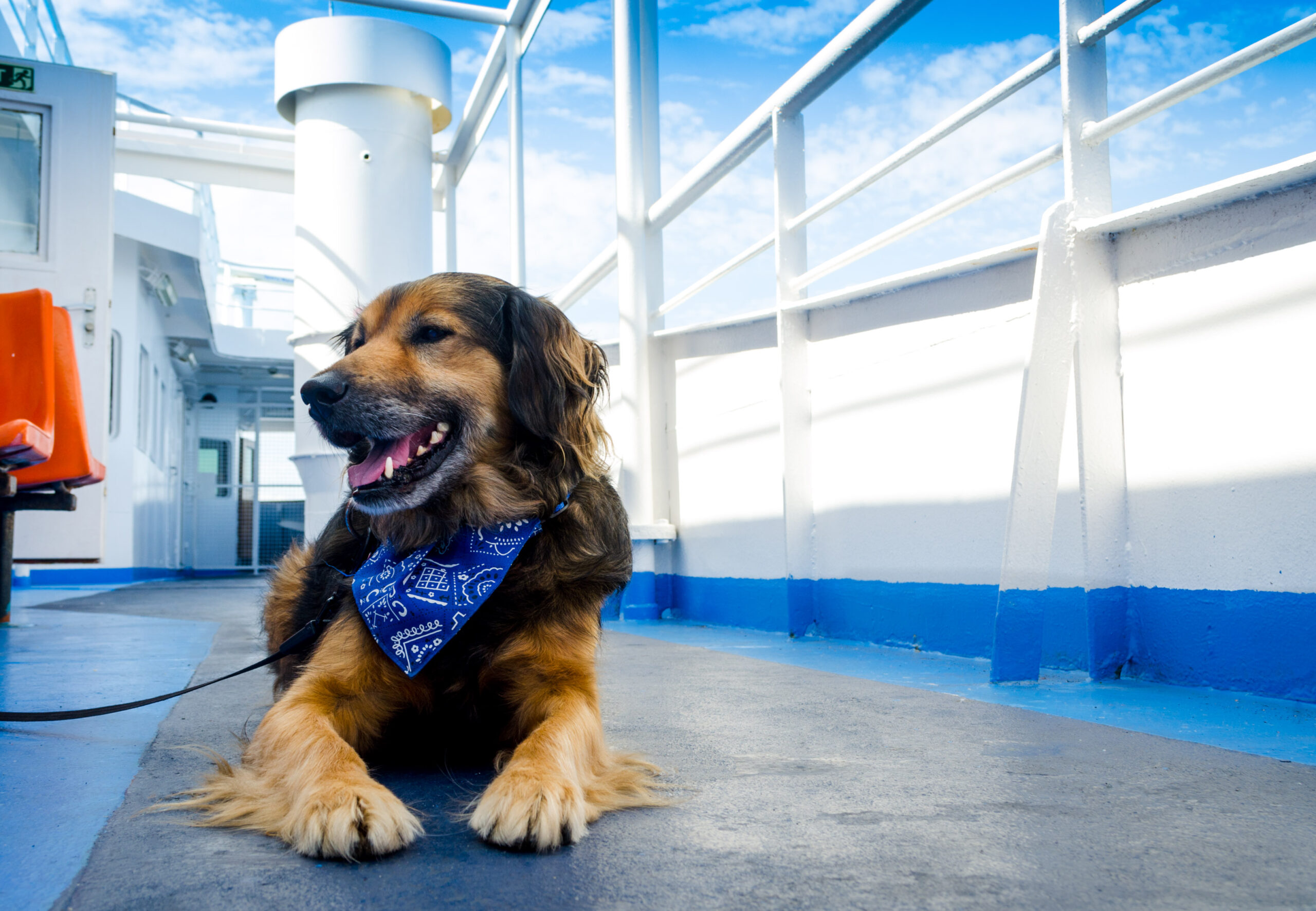
Travelling with a Dog – Passports and Vaccinations.
Travelling with your dog by ferry to Europe or Northern Ireland requires careful planning and the correct documentation. Since the UK’s departure from the European Union, pet travel rules have changed, and dog owners must ensure they meet all entry requirements before departure.
Quick Requirements Checklist
Before travelling with your dog, make sure you have:
✅ A valid microchip
✅ A valid rabies vaccination
✅ An Animal Health Certificate (AHC) or accepted pet passport
✅ Tapeworm treatment (if required for your destination)
✅ Confirmation of your ferry operator’s pet travel policy
⚠️ Important: Pet travel regulations can change. Always check the latest government guidance and your ferry operator’s pet travel requirements before departure.
Travelling to the EU and Northern Ireland
When travelling to an EU country or Northern Ireland, your dog will generally require:
- A microchip
- A valid rabies vaccination
- An Animal Health Certificate (AHC) or accepted pet passport
- Tapeworm treatment if travelling directly to Finland, Ireland, Northern Ireland, Norway or Malta
These requirements also apply to assistance dogs.
Before travelling, always check whether your destination country has any additional restrictions or entry requirements.
Dog Travel Requirements at a Glance
| Requirement | EU Countries | Northern Ireland | Non-EU Countries |
|---|---|---|---|
| Microchip | ✓ Required | ✓ Required | Usually required |
| Rabies Vaccination | ✓ Required | Not required with PTD | Country dependent |
| Animal Health Certificate | ✓ Required | Not required with PTD | Export Health Certificate required |
| Tapeworm Treatment | Some destinations | Not required with PTD | Country dependent |
Which Pet Passports Are Still Valid?
As Britain has left the European Union, pet passports issued in Great Britain (England, Scotland and Wales) can no longer be used to enter EU countries.
If you live in England, Scotland or Wales, you should not travel using a pet passport, even if it was originally issued in the EU. Your dog may be refused entry.
You can still use a pet passport if:
- You live in Northern Ireland
- The passport was issued in an approved country or territory and is accepted by your destination country
Pet Passports May Be Accepted If Issued In:
- EU member countries
- Andorra
- Faroe Islands
- Gibraltar
- Greenland
- Iceland
- Liechtenstein
- Monaco
- Northern Ireland
- Norway
- San Marino
- Switzerland
- Vatican City State
Always confirm acceptance with the authorities of your destination country before travelling.
If your passport is not accepted, you will need an Animal Health Certificate instead.
What Is an Animal Health Certificate (AHC)?
An Animal Health Certificate (AHC) is the document most UK pet owners now require when travelling with a dog to EU countries.
The certificate confirms that:
- Your dog has been microchipped
- Rabies vaccinations are valid
- Your pet meets the health requirements of the destination country
The certificate must be issued by an authorised veterinarian before travel.
If you are travelling from England, Scotland or Wales to the EU, an AHC is usually required unless you hold a valid accepted pet passport.
Travelling from Great Britain to Northern Ireland
If you are travelling from England, Scotland or Wales to Northern Ireland with a dog, cat or ferret, you will need a Northern Ireland Pet Travel Document (PTD).
Requirements include:
- Your pet must be microchipped
- Rabies vaccination is not required when travelling with a PTD
- Tapeworm treatment is not required when travelling with a PTD
These rules also apply to assistance dogs.
A Northern Ireland Pet Travel Document is:
- Free to apply for
- Valid for the lifetime of your ownership of the pet
Documents You’ll Need When Arriving in the EU
When arriving in an EU country or Northern Ireland, you must enter through an approved Travellers’ Point of Entry.
Officials may ask to see:
- Your dog’s Animal Health Certificate or accepted pet passport
- Proof of microchipping
- Rabies vaccination records
- Tapeworm treatment records (where required)
Having all documentation readily available will help avoid delays at border controls.
Taking Your Dog Outside the EU
If you’re travelling to a non-EU country, you will normally require an Export Health Certificate (EHC). The Export Health Certificate confirms that your dog meets the health and identification requirements of the destination country. You may also need to complete an Export Application Form (EXA) if travelling from England, Scotland or Wales. An official veterinarian must examine your pet and verify that all health requirements have been met before travel.
Because requirements vary significantly between countries, always check local regulations well in advance of departure.
Taking Your Dog on a Ferry
Pet travel policies vary between ferry operators and routes.
Before travelling:
- Confirm that your chosen ferry operator accepts pets
- Check whether your dog must remain in your vehicle, use onboard kennels or stay in a pet-friendly cabin
- Arrive early to allow time for documentation checks
- Keep all pet travel documents easily accessible
- Ensure vaccinations and treatments remain valid for the entire journey
Many ferry operators offer dedicated pet facilities, making ferry travel one of the most convenient ways to travel with dogs across Europe. Why not check out our Travelling with a dog – On the ferry for more hints and tips.
Travelling with More Than Five Pets
Special rules apply when travelling with multiple animals.
You cannot normally take more than five pets in a private vehicle to an EU country unless:
- You are attending or training for a recognised event
- The animals are being exported for commercial purposes
If travelling as a foot passenger, you may take up to five pets.
Dog Travel Timeline
For most journeys to the EU, the process looks like this:
- Step 1 – Microchip your dog.
- Step 2 – Ensure rabies vaccinations are up to date.
- Step 3 – Arrange an Animal Health Certificate if required.
- Step 4 – Book your ferry crossing and review pet travel policies.
- Step 5 – Carry all required documents and travel to your destination.
FAQ
If you’re planning to travel on a ferry with your pets, you may have a few questions about what requirements are needed. Below are answers to some of the most frequently asked questions about this.